
Connect students with real-world science in one of the Pacific Northwest's most celebrated research forests.
The H.J. Andrews Experimental Forest offers K-12 students and educators with opportunities to explore ecology, engage with authentic scientific data, and experience the wonder of old-growth forests through classroom resources, field experiences, virtual learning opportunities, and teacher professional development. Whether you are looking for lesson plans, research-based activities, long-term datasets, field trip opportunities, or ways to bring environmental science into your classroom, the H.J. Andrews Experimental Forest provides tools and experiences that inspire curiosity, scientific inquiry, and a deeper understanding of the natural world.
Andrews Forest Data in Your Classroom
The H.J. Andrews Experimental Forest is home to some of the longest-running ecological studies in the world. By observing forests, streams, wildlife, and climate over decades, researchers gain unique insights into how ecosystems change over time. Teachers can bring this real-world science into their classrooms through student-friendly datasets drawn from ongoing Andrews Forest research.
Data Nuggets are classroom-ready lessons built around real scientific research. Each activity introduces students to the scientists behind the work and challenges them to analyze authentic datasets, develop explanations, and think like scientists. Below are Data Nuggets that use data collected at the H.J. Andrews Experimental Forest.
All washed up? The effect of floods on cutthroat trout
Trees and bushes, home sweet home for warblers
What grows when the forest goes?
Visit the Data Nuggets website to learn more about other datasets you can use in your classroom.
Linking Literacy and Science: Ellie's Log
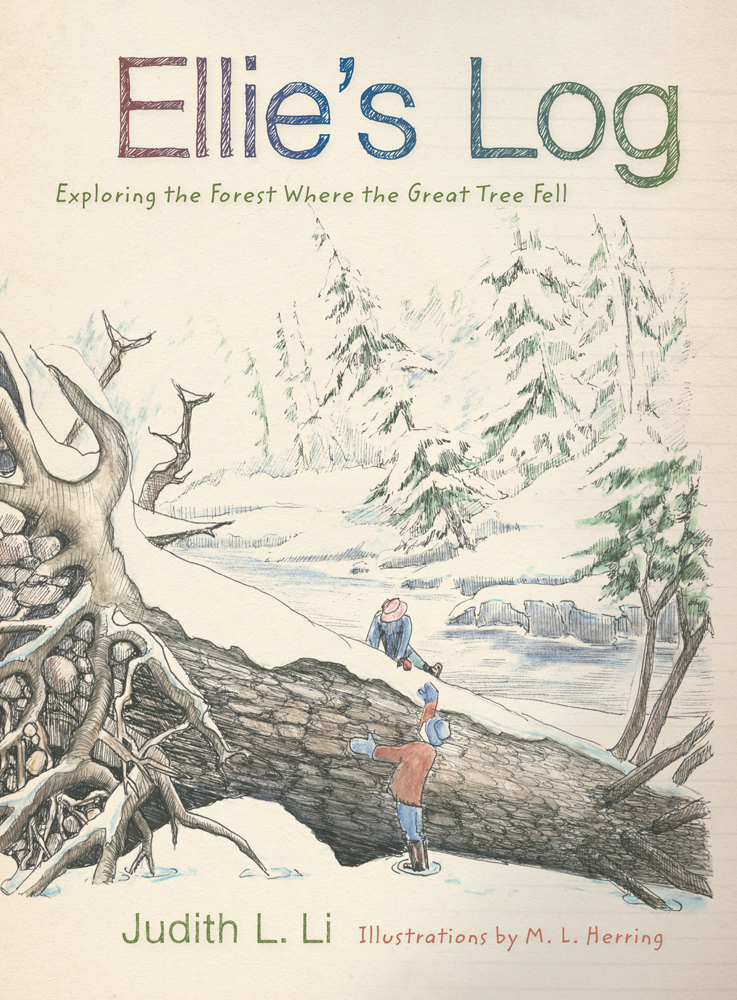
"Ellie's Log, Exploring the Forest Where the Great Tree Fell" by Judith L. Li. Illustrations by M. L. Herring. See the Ellie's Log Trailer.
After a huge tree crashes to the ground during a winter storm, ten-year-old Ellie and her new friend, Ricky, explore the forest where Ellie lives. Together, they learn how trees provide habitat for plants and animals high in the forest canopy, down among mossy old logs, and deep in the pools of a stream. The forest and animals described in Ellie's Log are based on those found at the H. J. Andrews Experimental Forest.
Visit the Ellie's Log website (ellieslog.org) for great activities for kids, and for a free downloadable teacher's guide.
Ages 9-12 (Grades 4-6). Companion Teacher's Guide. Color Illustrations. 112 pages. 2013. ISBN 978-0-87071-696-6. Paperback. Available through bookstores, online retailers, and through OSU Press.
Downloadable Lesson Plans
HJA Zen of Ecology Lesson
In this lesson, students use observations to develop research questions. Students spend quiet time in nature making observations, drawing and reflecting ultimately developing research questions that are shared with other students and evaluated using the SPAM (Simple-Practical-Answerable-Measurable) test. This lesson was adapted from a similar activity developed at the Rocky Mountain Biological Laboratory.
Download the plan: (coming soon)
Lessons on Ecology: H.J. Andrews Experimental Forest Tea Party
Excellent for middle and high school life science classrooms
Created by Molly Charnes, high school biology and environmental systems teacher at Academy of International Studies, Woodburn, Oregon, and a Research Experiences for Teachers (RET) participant at the Andrews Forest. The lesson plan adapts the “tea party” literacy strategy to help teachers introduce the biotic components of an old growth forest.
- Download the Lessons on Ecology Tea Party lesson plan (PDF): (coming soon)
- Download the "Stream pack” – Additional organism role cards for the HJ Andrews Experimental Forest Tea Party Activity"(PDF): (coming soon).
Phenology Flipbook
Hosted by the Oregon Museum of Science and Industry, students make observations and sketches to design a flipbook that tracks changes in flowers over time.
Download the plan: Phenology Flipbook
Do Dead Trees Go To Heaven
From the Oregon Natural Resources Education Program and part of the Lab Coats Optional video clips, this video highlights the processes associated with the decomposition of trees at the HJA. Other videos include Retweeting the Forest, Fun Dye with Fungi and, New Eyes on the Sky.
Download the plan: Do Dead Trees Go to Heaven
Resources for Field Trips to the HJA
Opportunities are available for middle school and high school teachers willing to coordinate their own classroom trips to the Andrews Forest. Contact the Forest Director for more information. Below we share representative activities that can be used during a field trip.
HJA Zen of Ecology Lesson
In this lesson, students use observations to develop research questions. Students spend quiet time in nature making observations, drawing and reflecting ultimately developing research questions that are shared with other students and evaluated using the SPAM (Simple-Practical-Answerable-Measurable) test. This lesson was adapted from a similar activity developed at the Rocky Mountain Biological Laboratory.
Download the plan: (coming soon)
Forest Plot Activity.
In this activity learners identify four different tree types and measure tree diameters and cross classification to evaluate size class and species distribution in the HJA. Download the Forest Plot Activity Plan: Forest Plot Activity
University of Oregon Environmental Leadership Program (UO-ELP)
The UO-ELP program partners with H.J. Andrews Experimental Forest (HJA) staff to provide field-based learning experiences for middle school students from the Eugene-Springfield area. Contact Dr. Katie Lynch for more information.
Authentic Research Experience for Teachers
The Authentic Research Experiences for Teachers (ARETS) project took place over 4 years, from 2022 to 2026. Three of the twenty teachers worked with researchers at the HJA gaining first-hand experience in ecological research and making connections with researchers and other teachers that will benefit them and their students for years to come. Read about the experience of these three teachers and download activities.
Jacob DeGroot
High School Science Teacher - Milwaukee OR
Activity Title: Annotated Reading on a NYT Article about Long-Term Data taken at Mauna Loa: A Lesson on Long-Term Data, Scientific Uncertainty, and the Nature of Science
Rebecca Hawk
Middle School Science Teacher - Portland OR
Activity Title: Forest Management in PNW: Middle Schoolers Design Experiments to Examine Impacts
Caroline McCoy
Middle School Science Teacher - Portland OR
Activity Title: Superfly, Caddisfly: Intro to Macroinvertebrates
Opportunities for Teachers
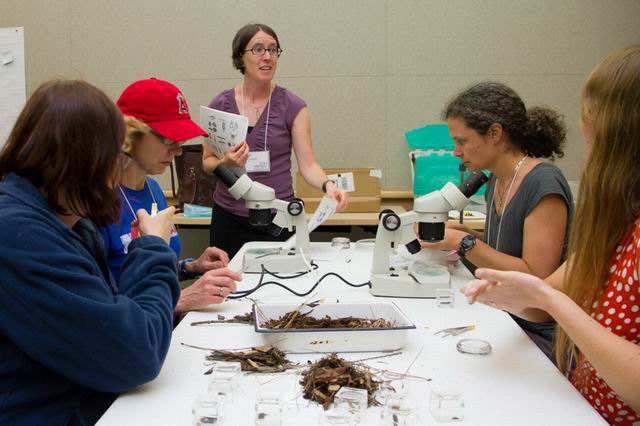 The Andrews Forest LTER K-12 teacher professional development program offers opportunities for K-12 teachers to build their understanding of the scientific process and to expand their capacity to engage their students in field-based science inquiry based on Andrews LTER research. Through funding from the Schoolyard LTER program, the NSF Research Experience for Teachers program, and other grants, the Andrews Forest partners with the Center for Research on Lifelong STEM Learning and the Oregon Natural Resources Education Program (ONREP) for projects that involve teachers in experiential investigations and problem solving, data collection and analysis, teacher collaborations, and development of research-based projects for their schoolyards.
Teachers interested in connecting with the Andrews Forest K12 programming should contact the Forest Director.
Methods to Optimize Contextualized Science Instruction (MOCSI)
Active years: 2025–29
The Methods to Optimize Contextualized Science Instruction (MOCSI) project helps K–12 teachers connect science instruction to authentic places, experiences, and scientific research. The project draws on field-learning opportunities at the H.J. Andrews Experimental Forest and Florida Coastal Everglades LTER to explore how place-based and contextualized science learning can be brought to students both in and beyond the field.
The goals of the MOCSI project are to:
- Improve K–12 science instruction by helping teachers through focused professional development connect classroom learning to authentic scientific contexts and experiences.
- Extend the benefits of field-based science learning at the H.J. Andrews Experimental Forest and Florida Coastal Everglades LTER to a wider range of teachers and students.
Through MOCSI, teachers engage in professional learning focused on incorporating field experiences, scientific research, and curated multimedia resources into their science instruction. Participating teachers also contribute to research examining their experiences with contextualized science teaching and learning.
Stipends and university credit are available for participation.
If you are interested in participating in future stages of the MOSCI project, please contact Michael Giamellaro or Kari O’Connell