
Dr. Catalina Segura, Dr. Julian Klaus, Dr. Dana Warren, and graduate student Maeve Bittle are investigating how fire and drought conditions affect instream primary production and nutrient dynamics. Mountainous headwater streams in forests like the H.J. Andrews Experimental Forest play an important role in ecological function as well as downstream water quality. Cool shaded streams provide important habitat for fish, salamanders, macroinvertebrates, and primary producers. Oregon Cascade streams are typically co-limited by light and nitrate. In 2023, the Lookout Fire burned 70% of the H.J. Andrews Experimental Forest, changing the nutrient inputs and amount of light in the majority of the headwater streams. To investigate how primary production and instream nutrient dynamics respond to fire and drought conditions, nutrient diffusing substrate cups were deployed in the summer of 2026 for 18-21 days to evaluate if there are shifts in nitrate or phosphate limitation in burned versus unburned streams. Ceramic tiles were also deployed for 5-6 weeks in streams of varying burn severities, to evaluate the amount of algal growth as a proxy for primary production. Burn severity of the riparian area and light incidence above the streambed were evaluated at the time of deployment. The 2026 field work involved two Research Experience for Undergraduates (REU) interns, Emma Cooper and Katie Hovind.
Post Fire Stream Nutrient Dynamics 2026
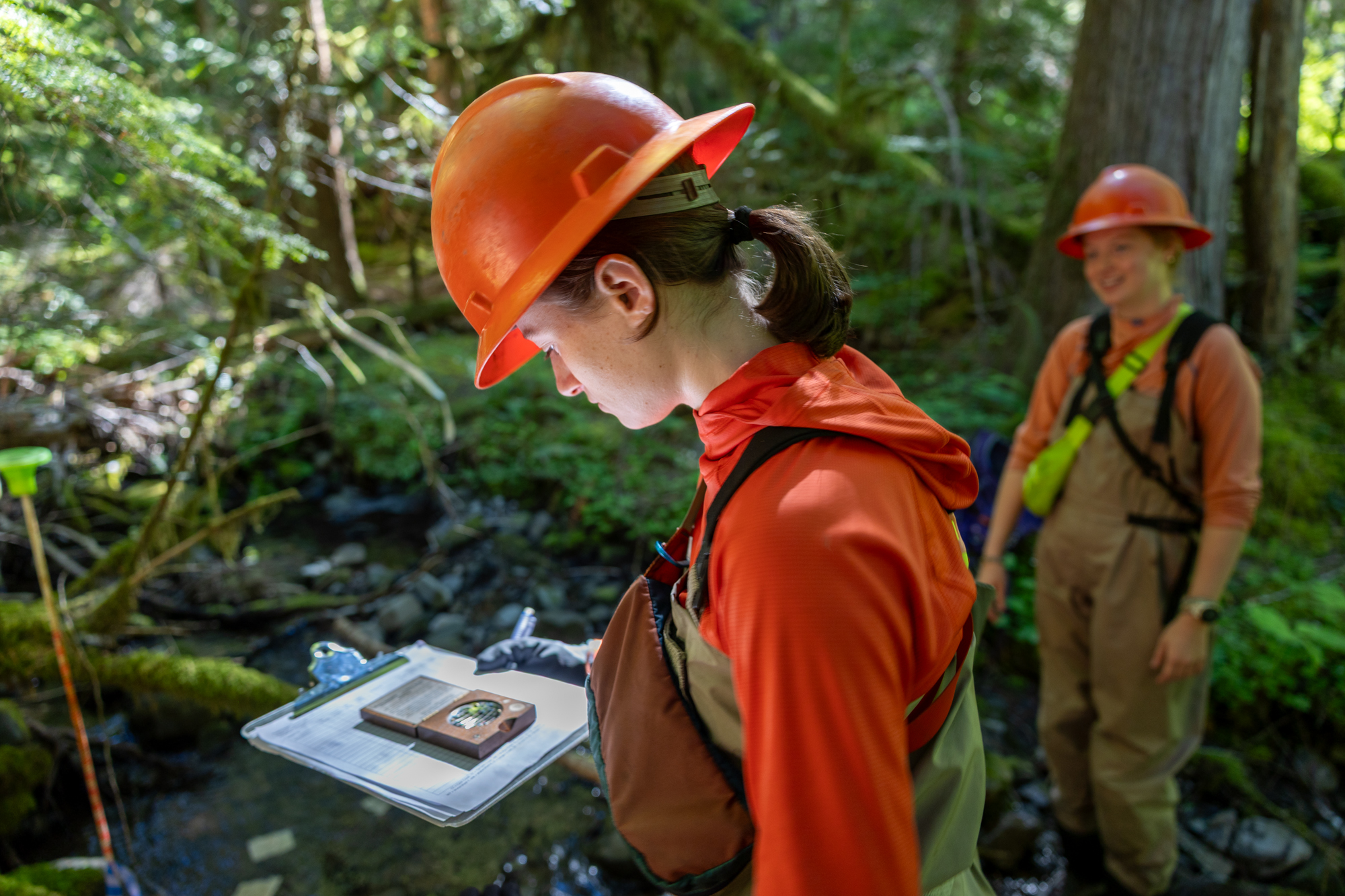
REU student Katie Hovind measures canopy cover over the streambed using a densiometer
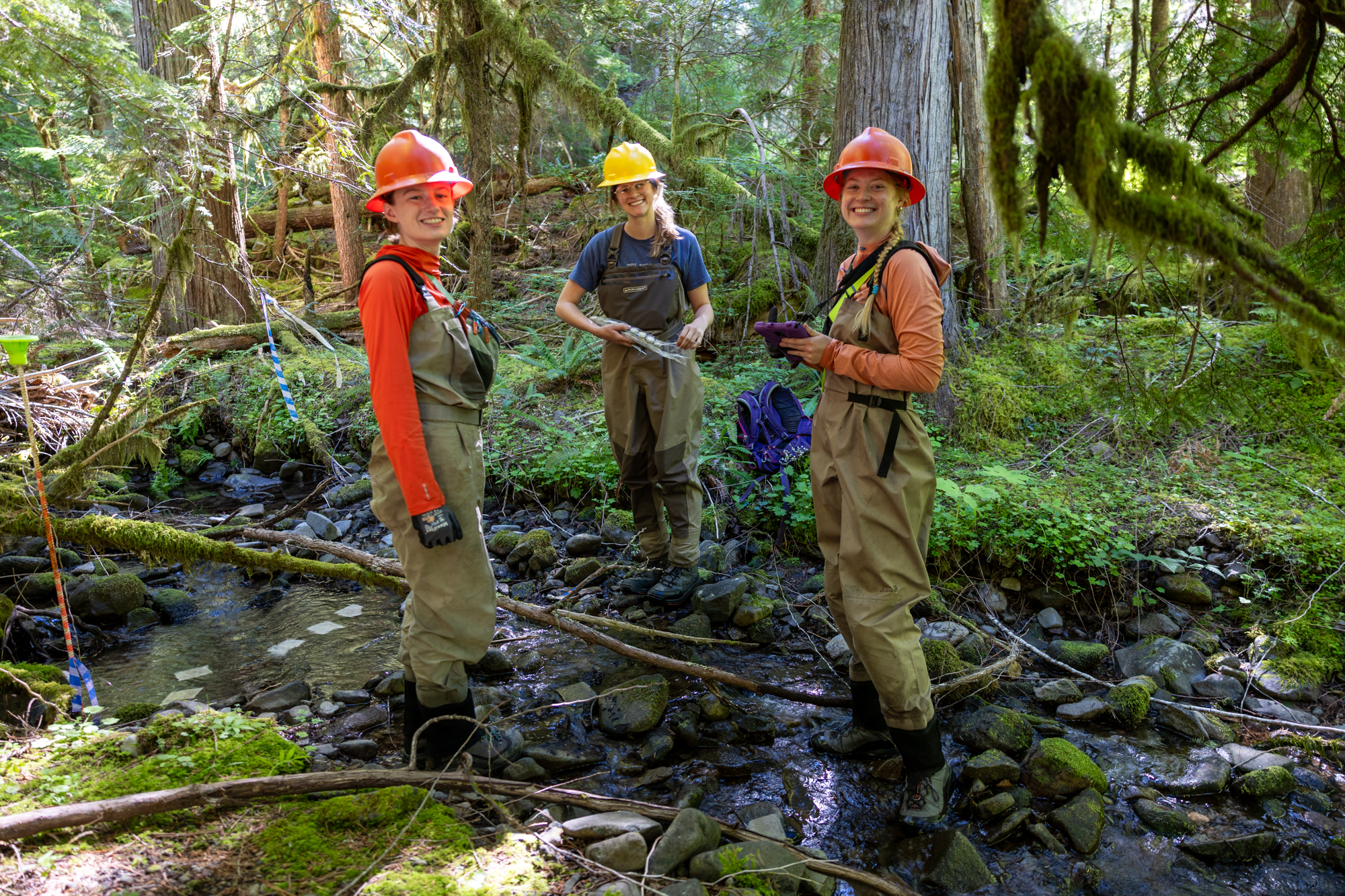
REU student Katie Hovind, graduate student Maeve Bittle, and REU student Emma Cooper working in McCrae Creek at the HJA
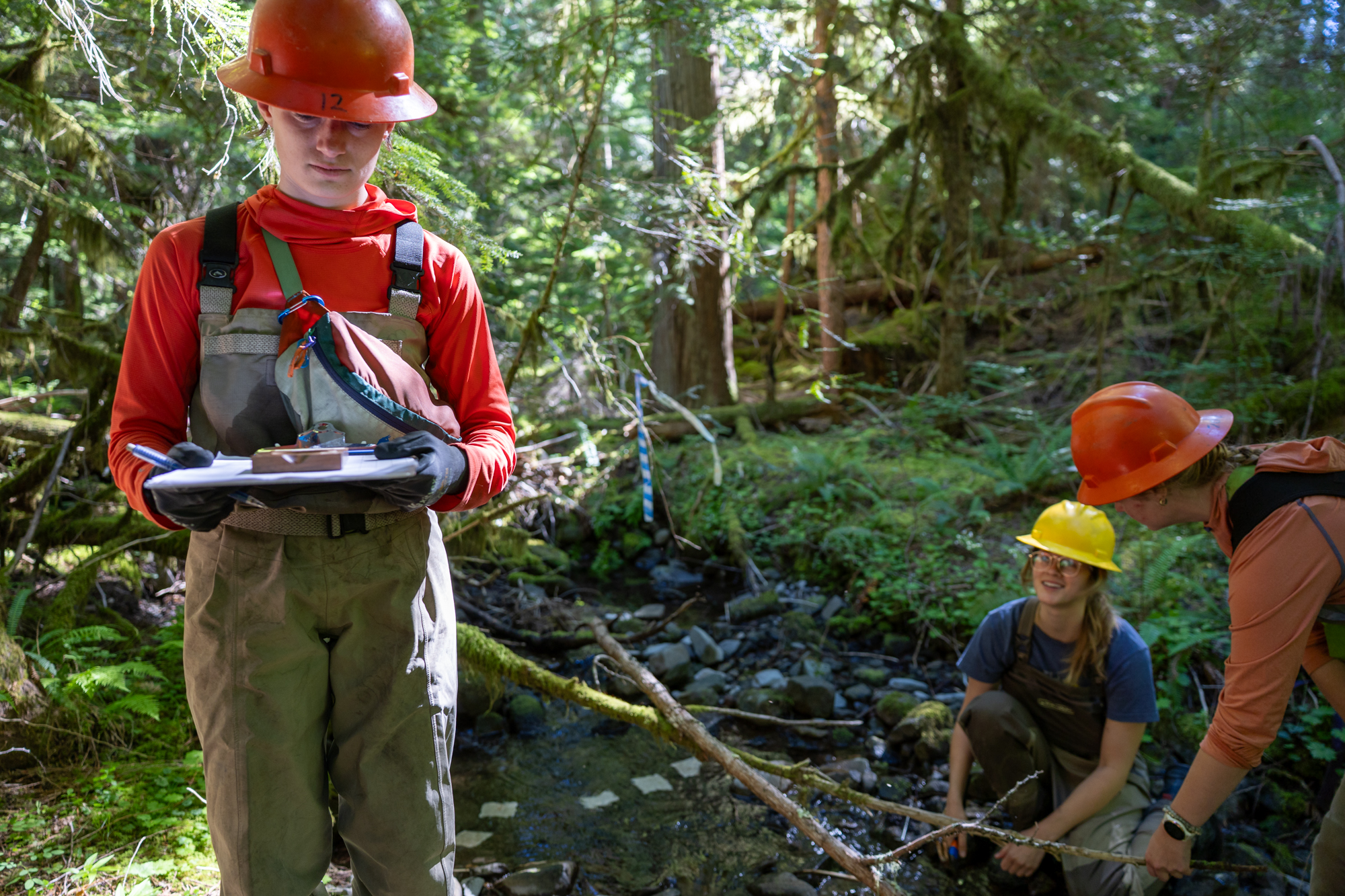
REU student Katie Hovind measures canopy cover over the streambed using a densiometer
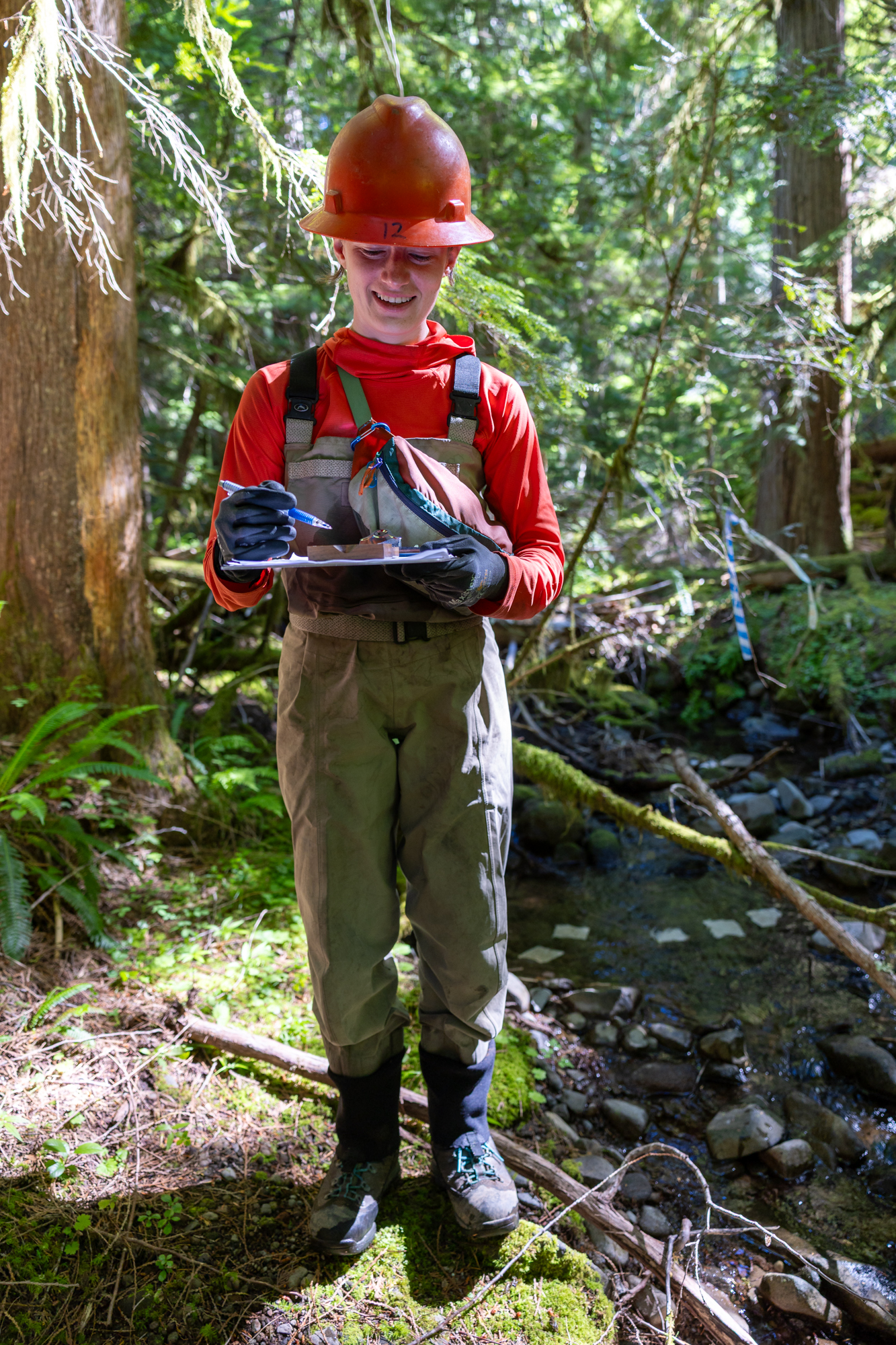
REU student Katie Hovind measures canopy cover over the streambed using a densiometer
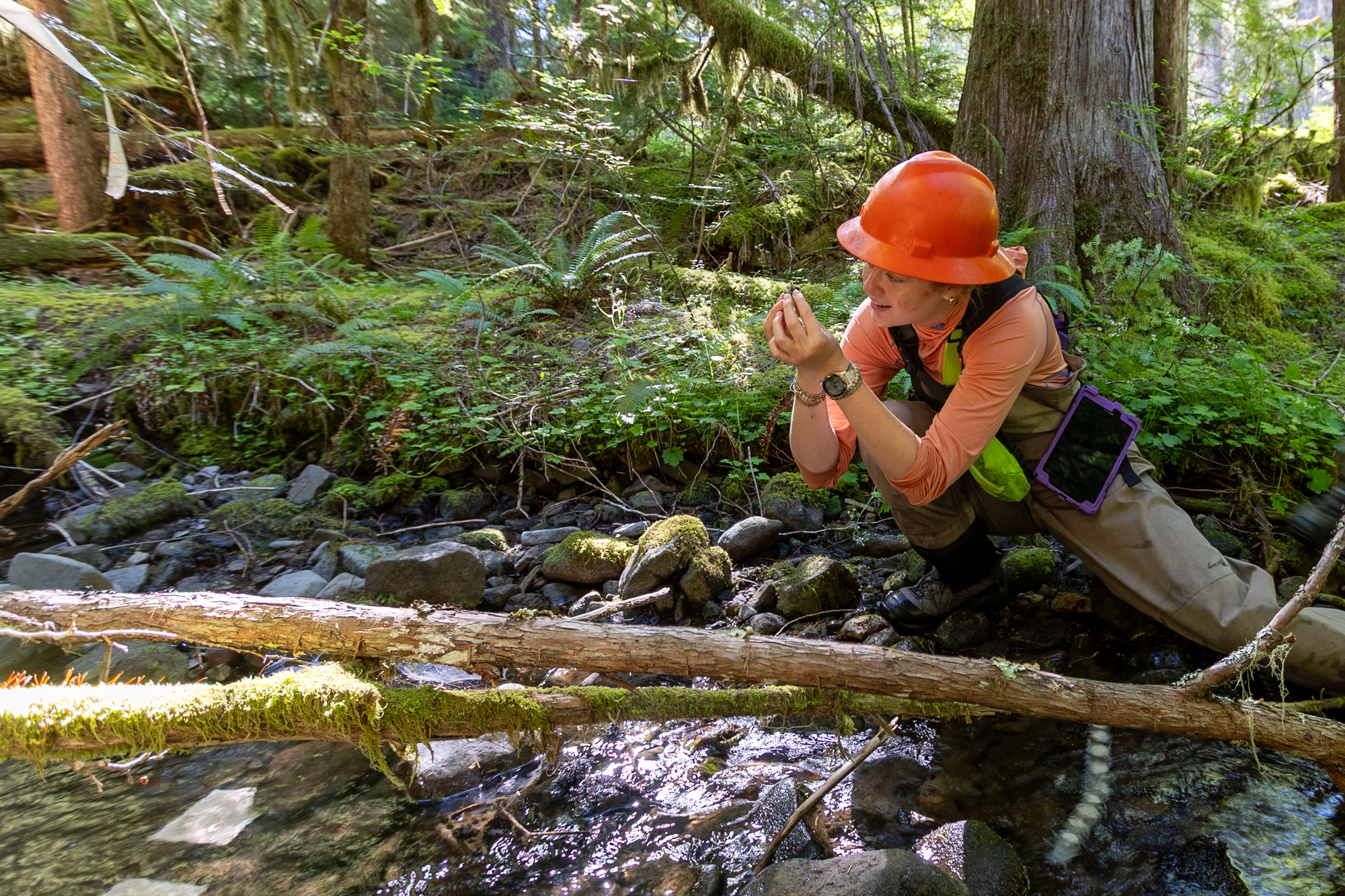
REU student Emma Cooper inspects a rock with algae in McCrae Creek at the HJA
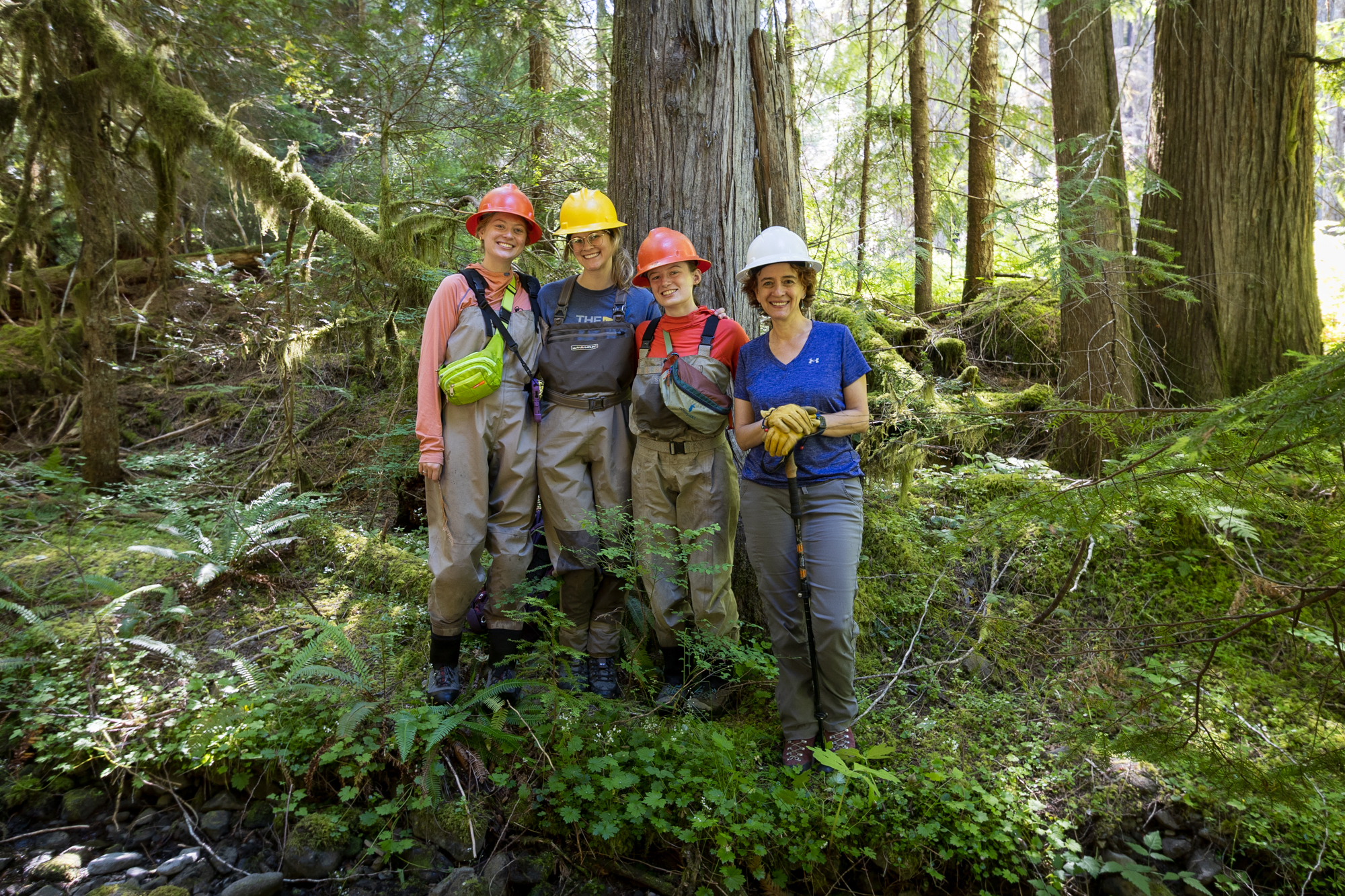
REU student Katie Hovind, graduate student Maeve Bittle, REU student Emma Cooper, and Professor Catalina Segura at McCrae Creek at the HJA
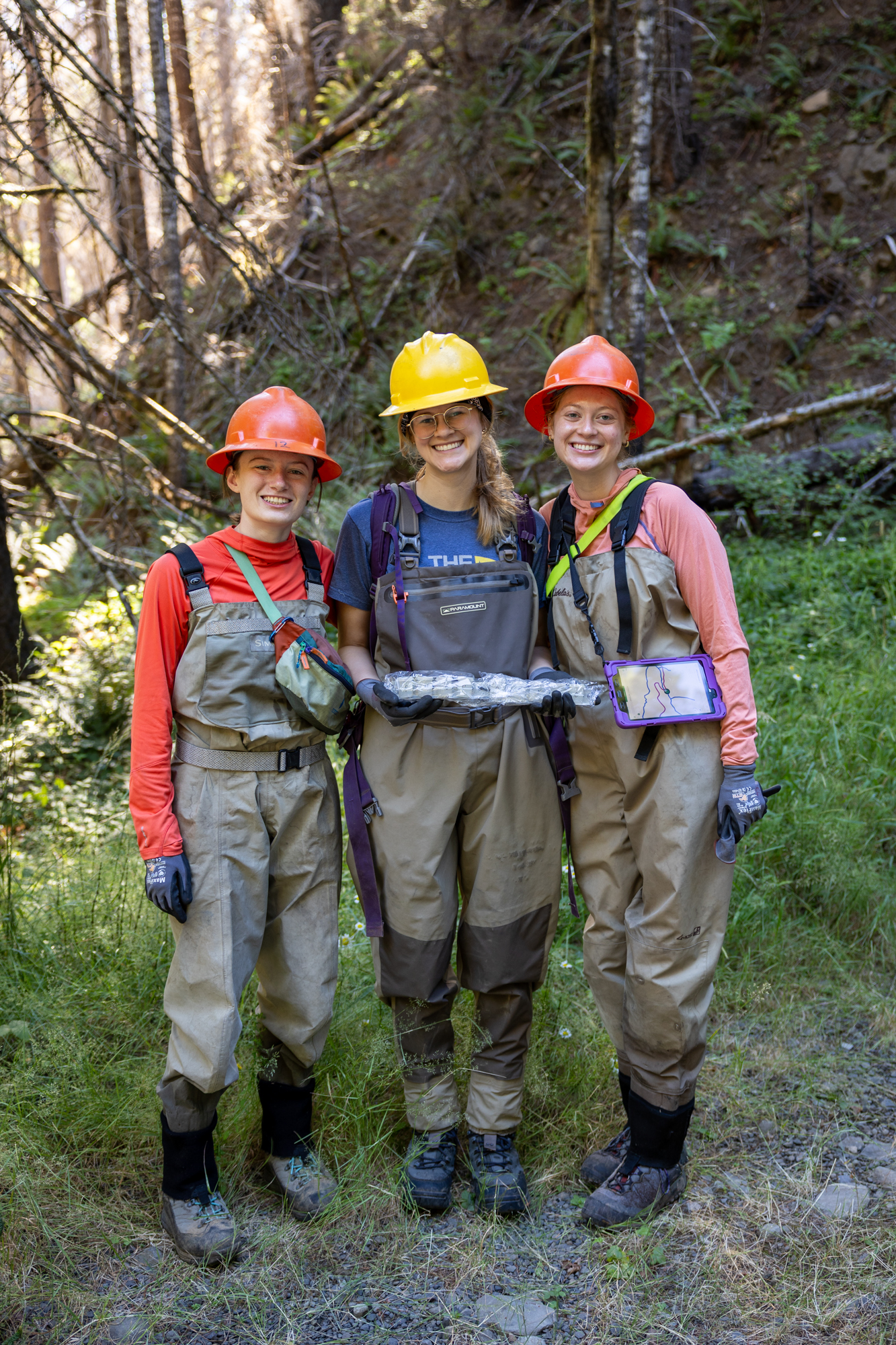
REU student Katie Hovind, graduate student Maeve Bittle, and REU student Emma Cooper ready for field work
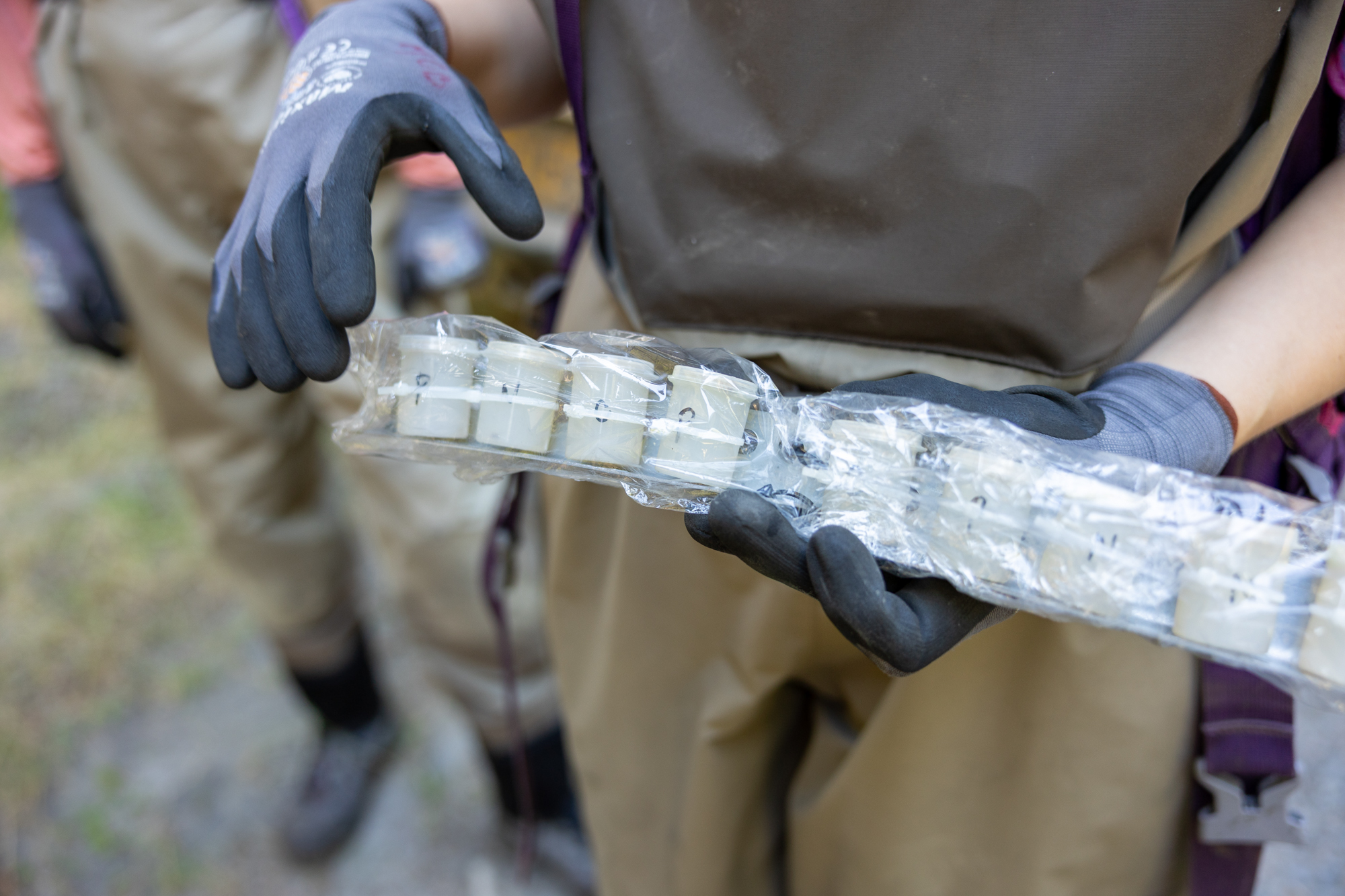
Vials used to measure nutrient uptake will be placed in the stream (C for control, N for nitrate, and P for phosphate)
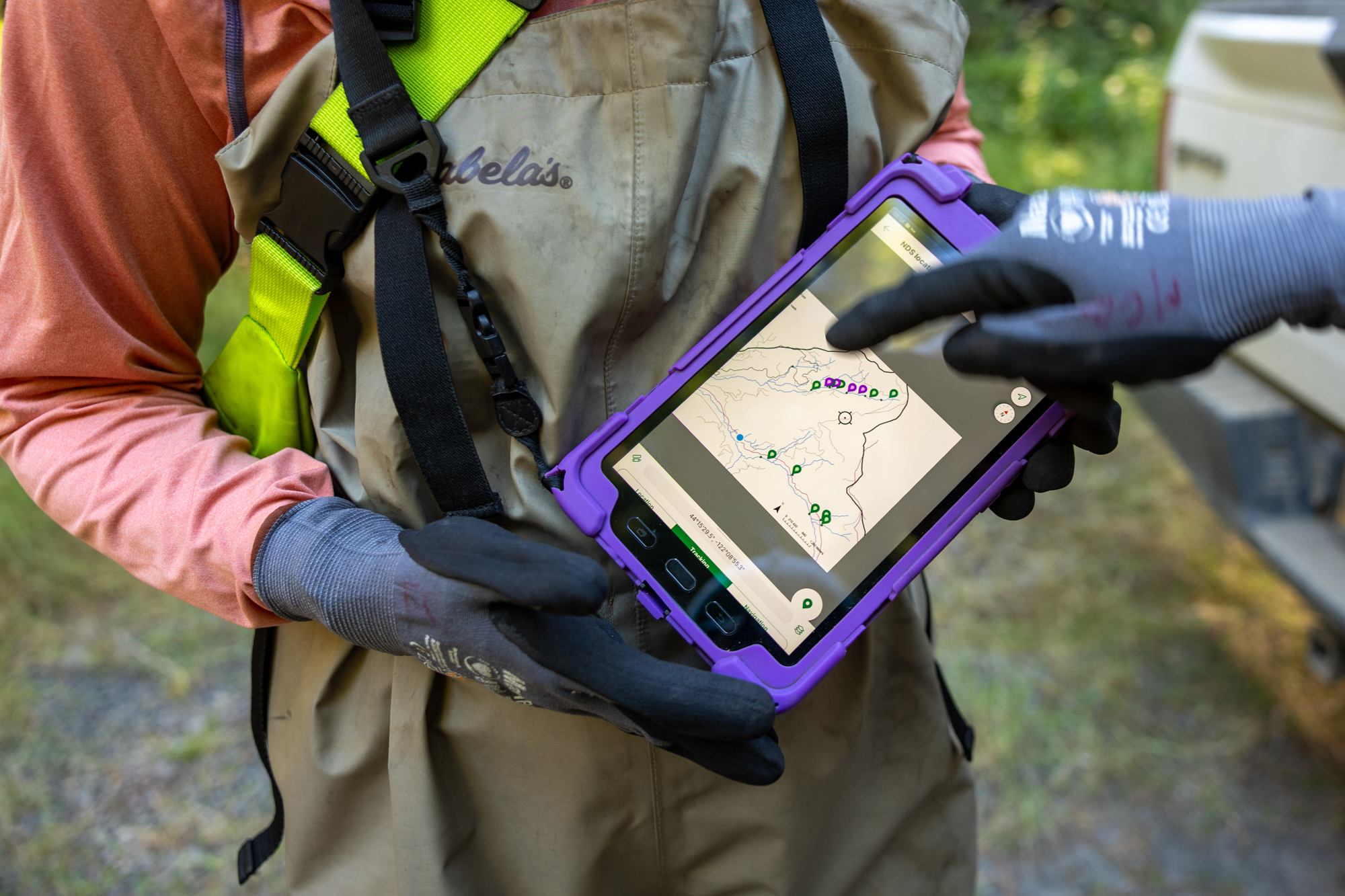
Study locations in streams at the HJA, which are in recently burned and unburned watersheds
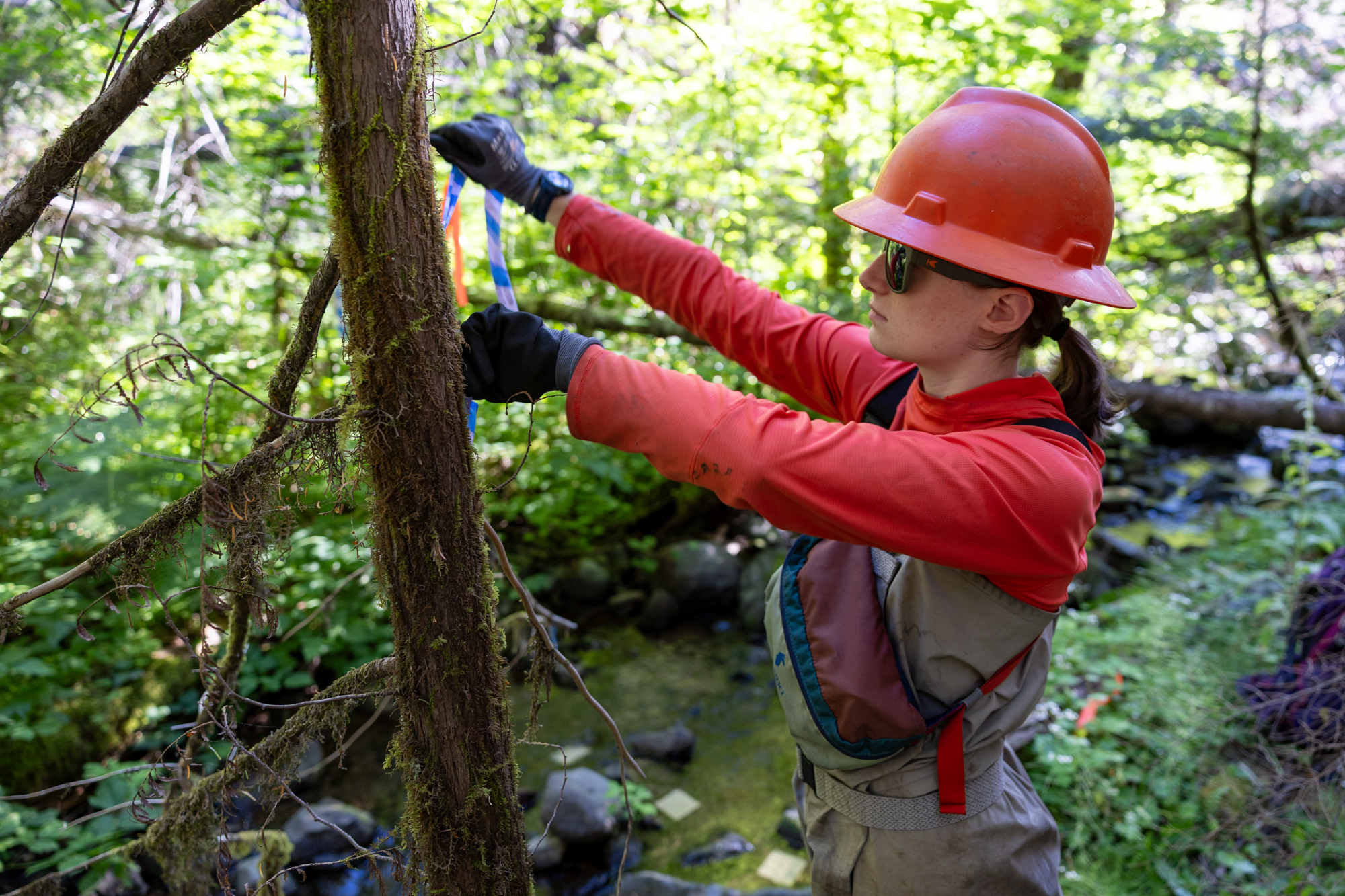
REU student Katie Hovind attaches flagging to a tree to mark the location of the experiment along the stream
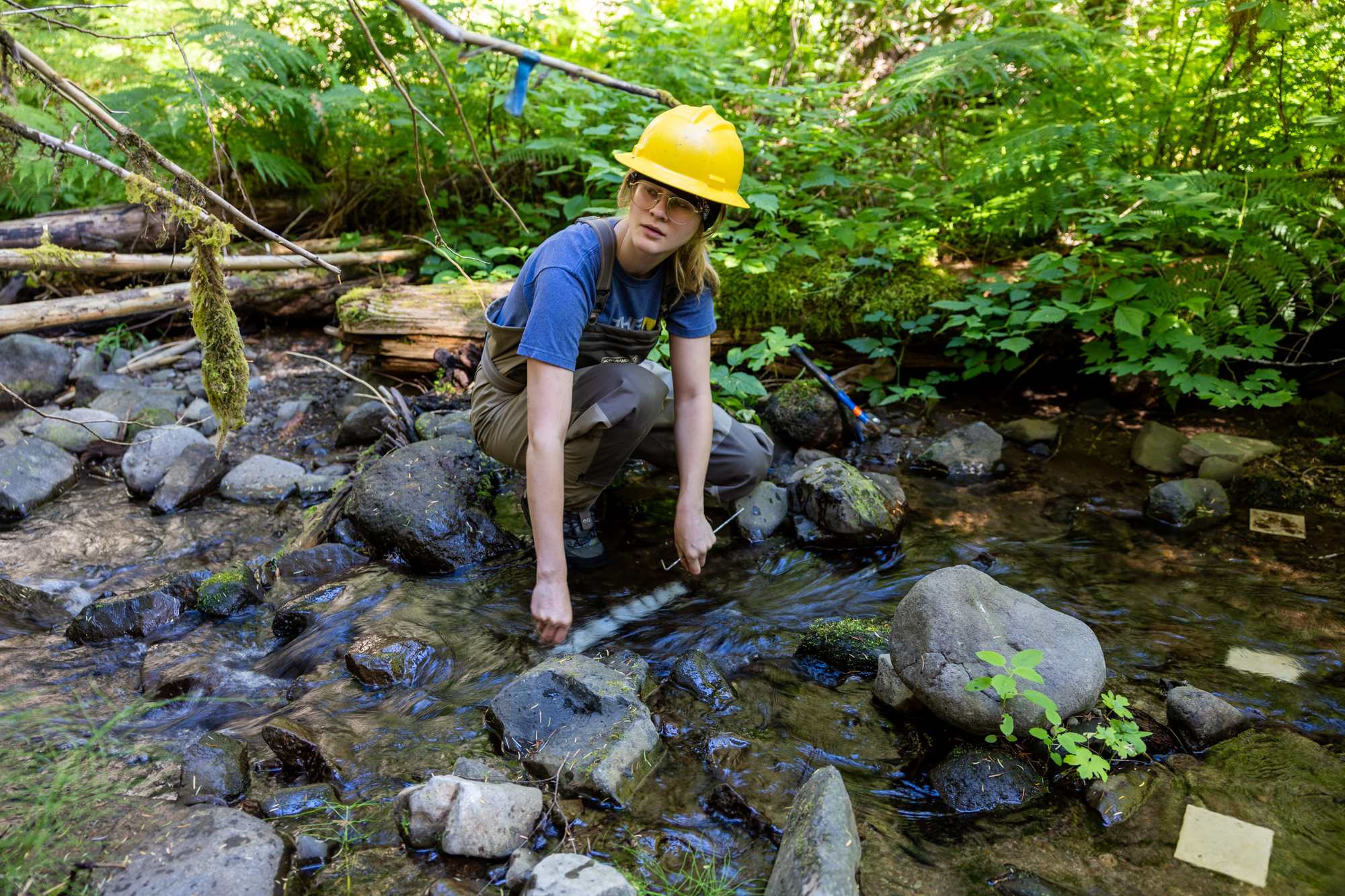
Graduate student Maeve Bittle secures vials that will measure nutrient updake in the stream.
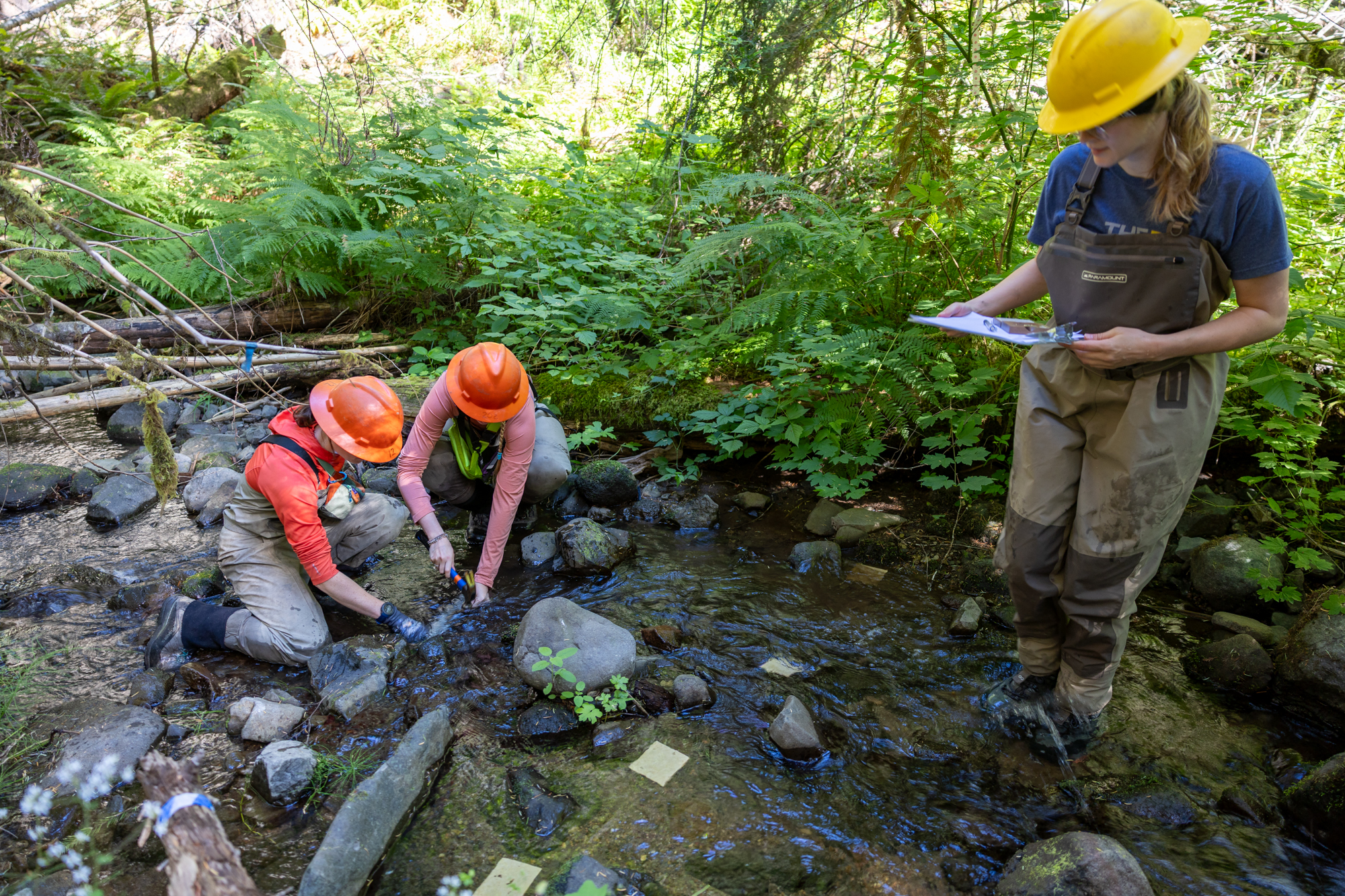
REU students and graduate student Maeve Bittle employ sensors, tiles, and vials that will measure nutrient update, stream teampeature, and primary production.
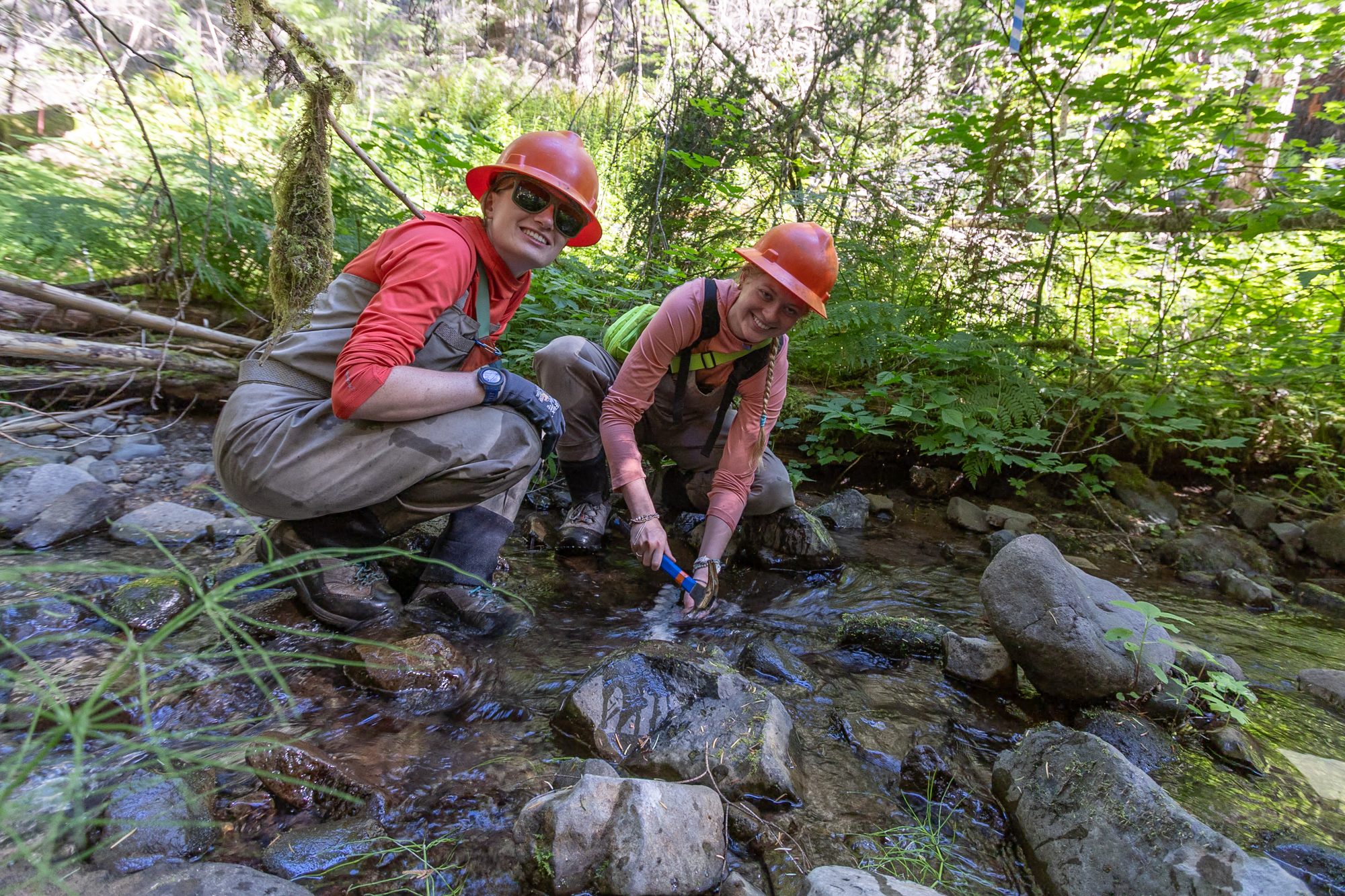
REU students Katie Hovind and Emma Cooper working in Nostoc Creek in the HJA
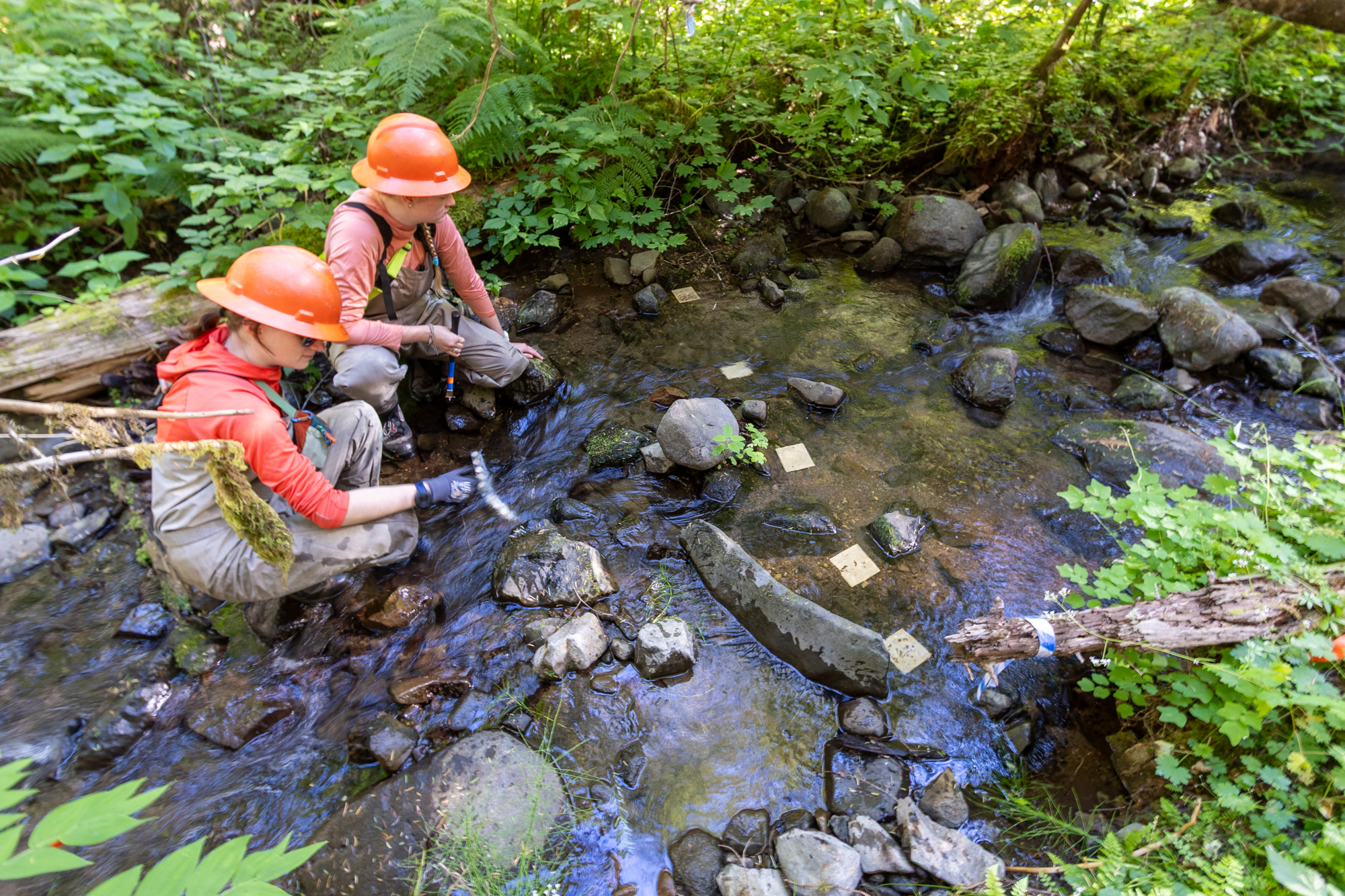
REU students Katie Hovind and Emma Cooper working in Nostoc Creek in the HJA
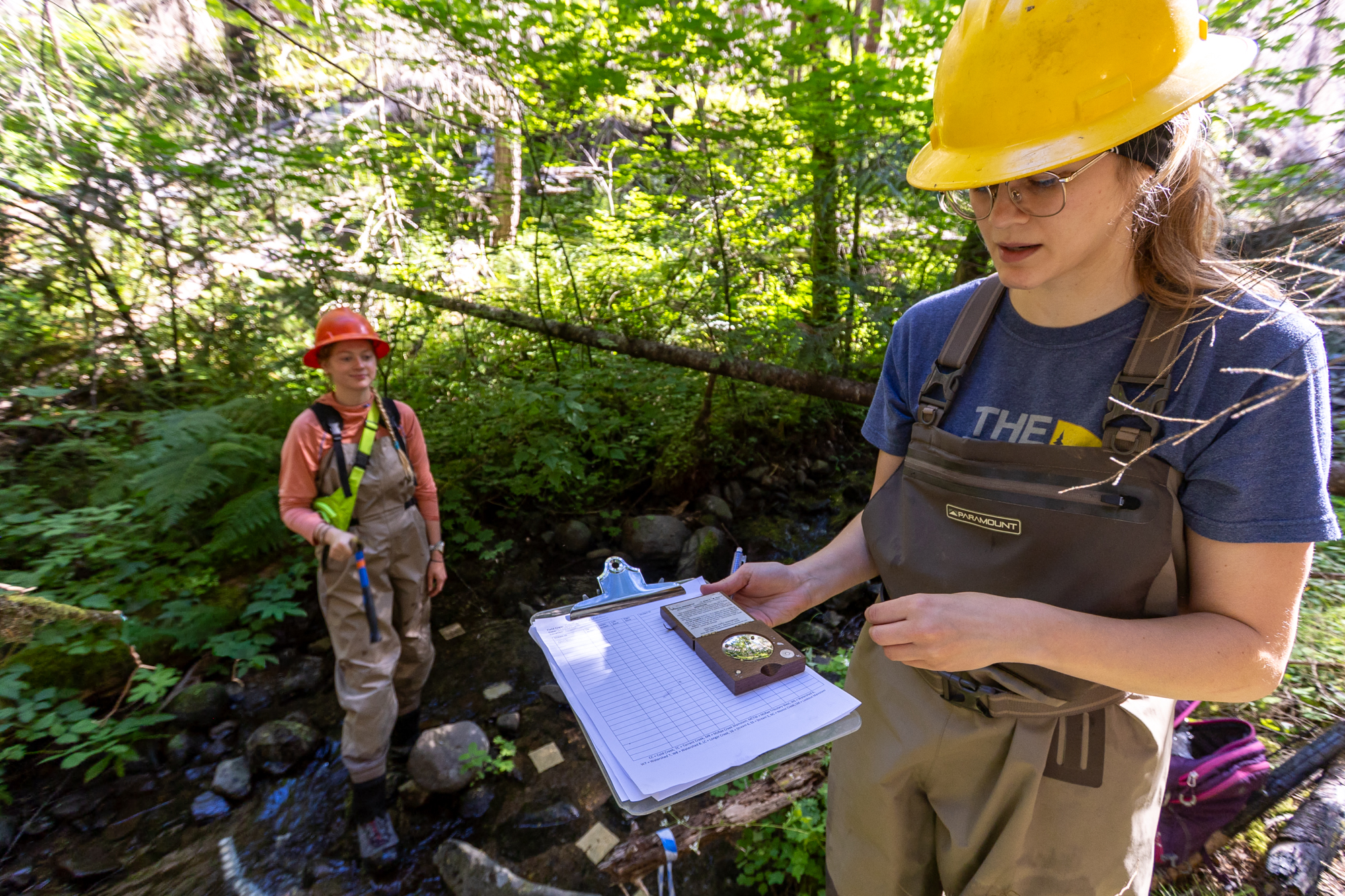
Graduate student Maeve Bittle demonstrates a densiometer, which measures light incidence (canopy cover) above the streambed
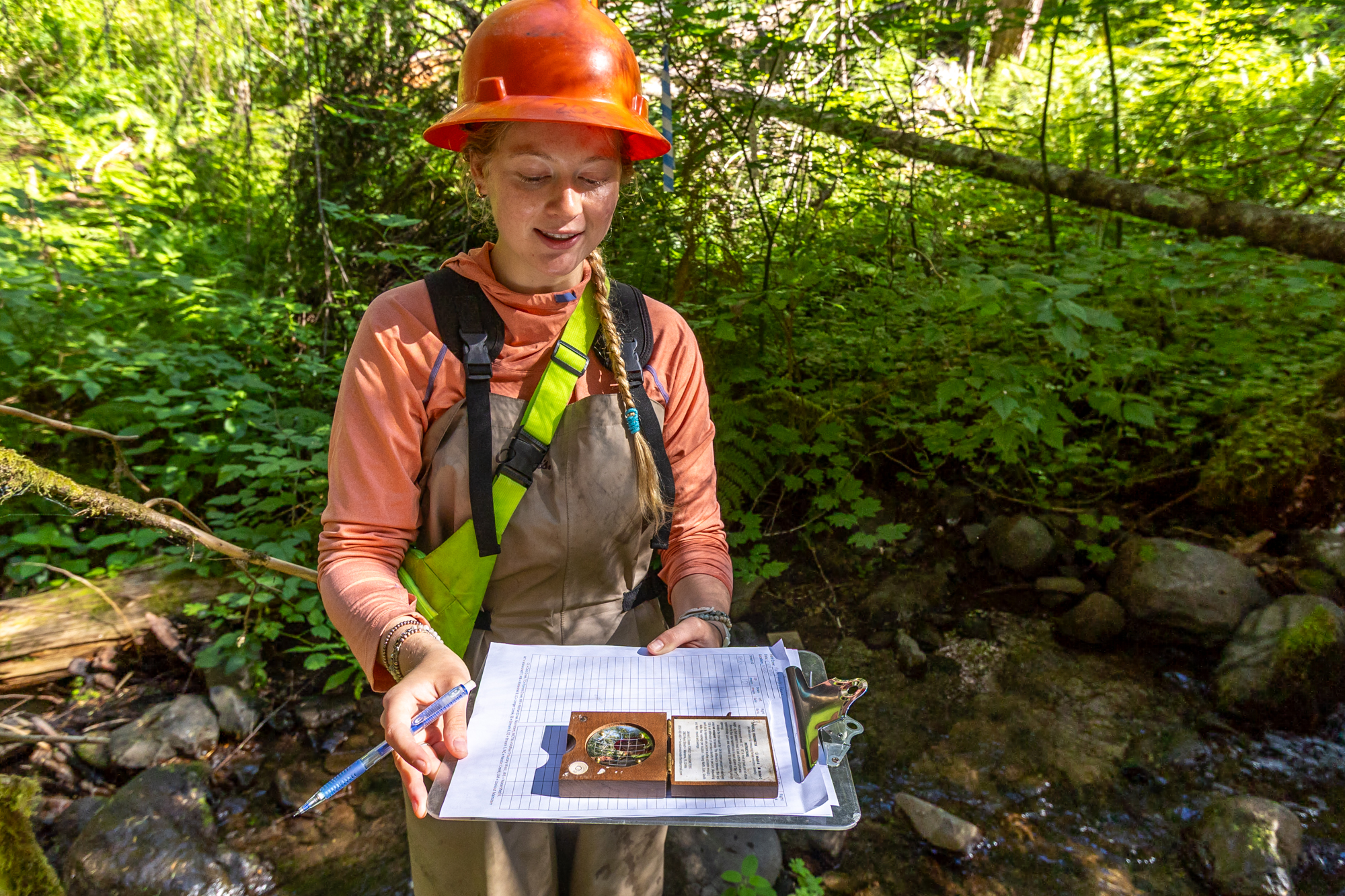
REU student Emma Cooper measures canopy cover over the streambed using a densiometer
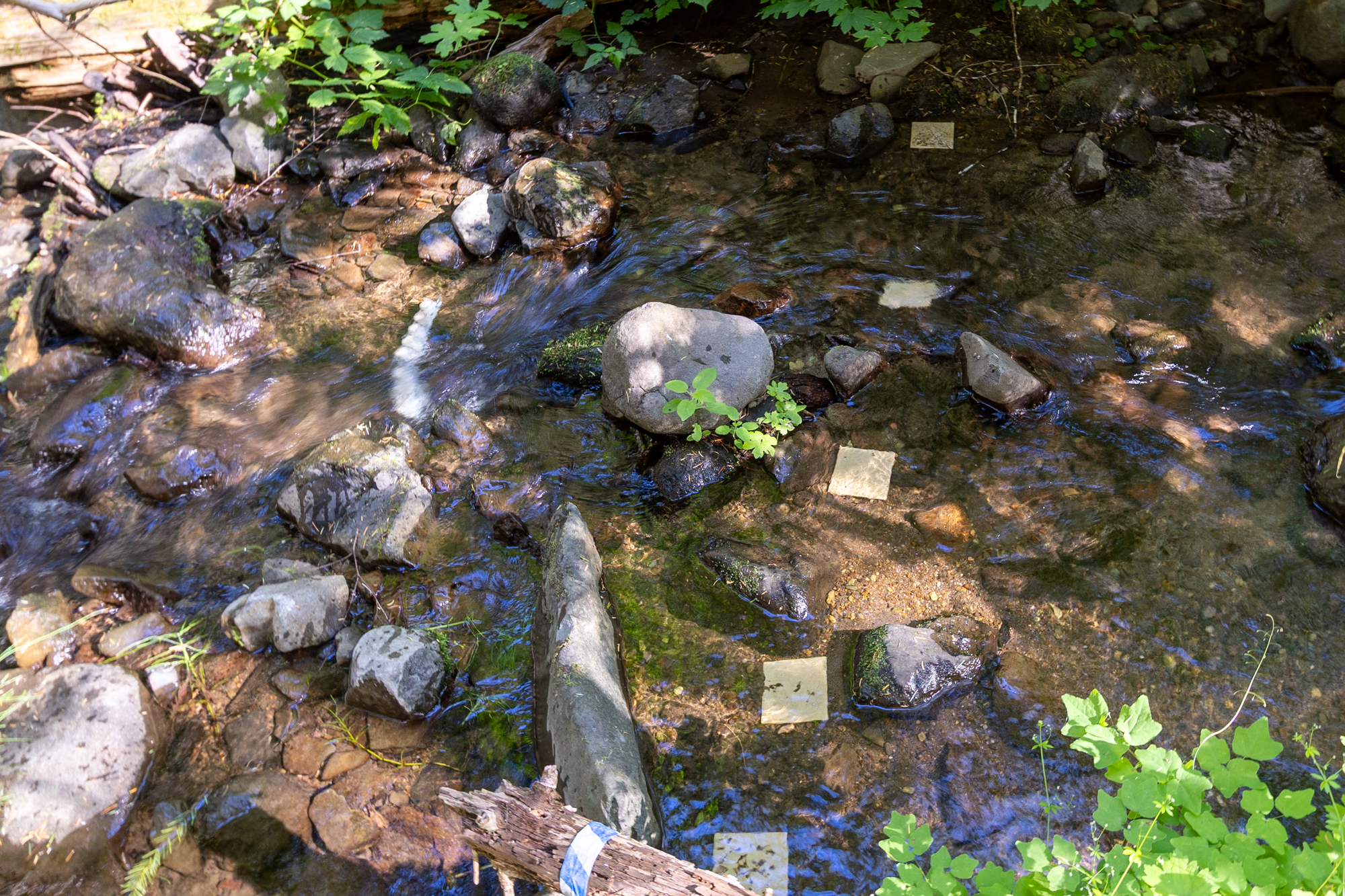
Vials (left), tiles (center), and a temperature sensor measure nutrient update, algal growth (primary productivity) and stream temperature
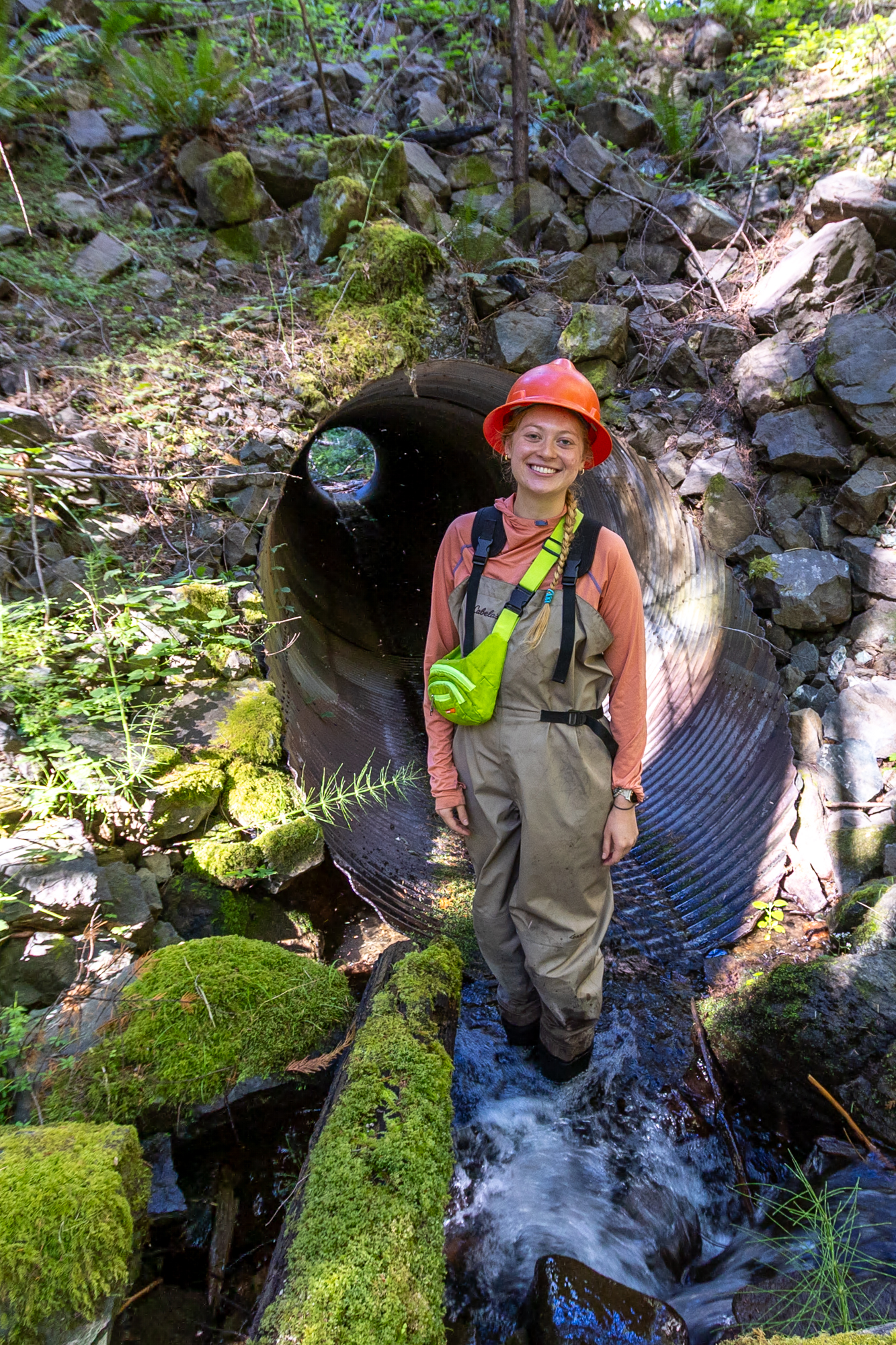
REU student Emma Cooper is studying discharge rates from stream culverts at the HJA
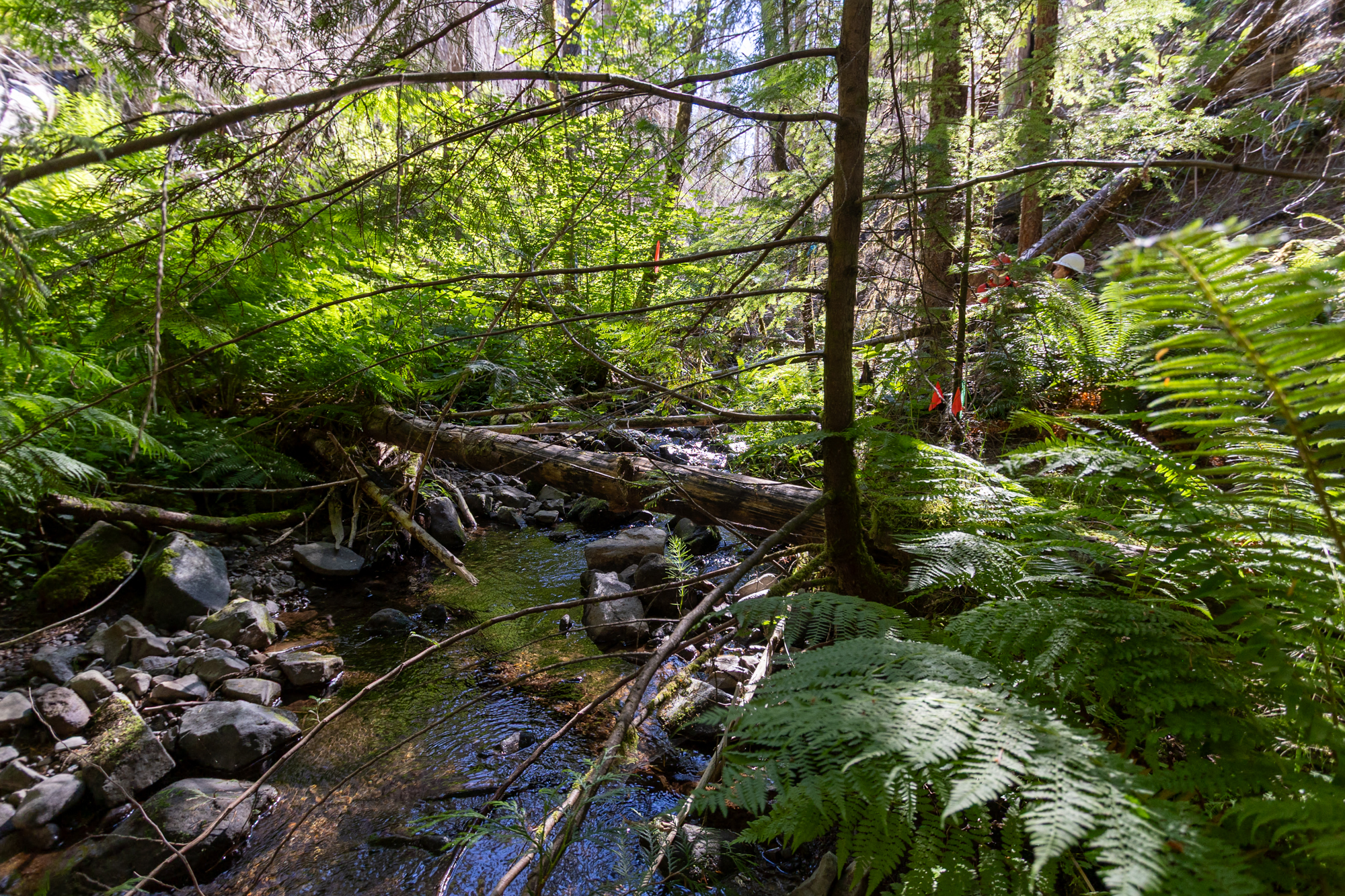
A section of Nostoc Creek being studied for stream nutrient and primary production changes following wildfire